Skip to main content Scroll Top
Air quality
A public health issue.

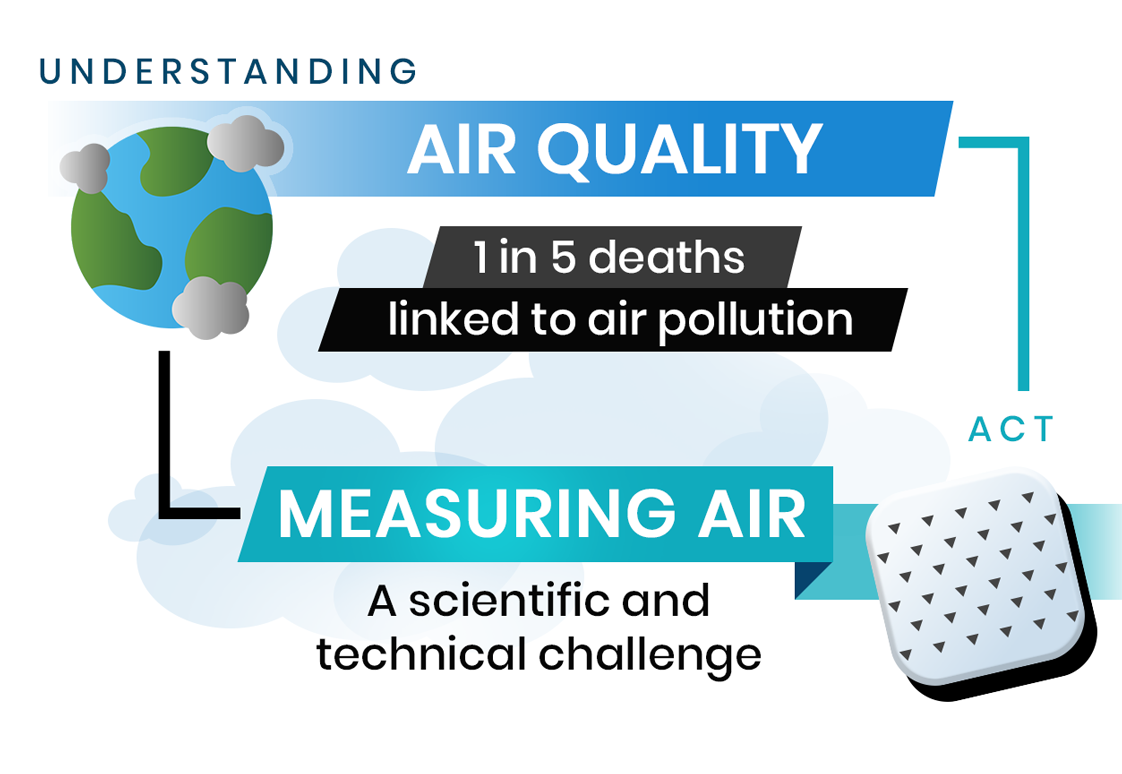
With 1 in 5 deaths attributable to pollution, air quality is a real public health issue.

Measure to understand, understand to act.

mesure
Measuring air is a scientific and technical challenge.

The air contains hundreds of different species, most of them in very low concentrations. How can we tell them apart and quantify them?

There are analytical measurement solutions, usually deployed by air quality monitoring networks or research laboratories. These tools are generally very powerful, but very expensive and complex to use.

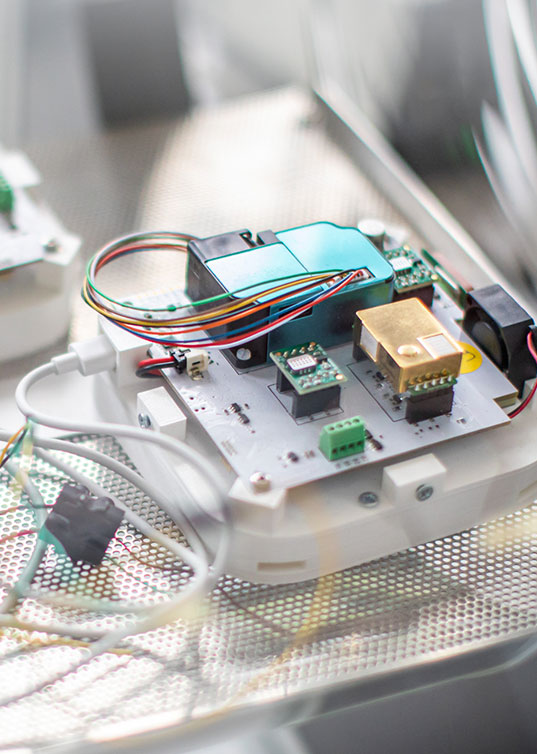
SENSORS are an interesting alternative. Thanks to their low cost, they can be distributed in large numbers in the field, thereby improving spatial coverage. What's more, they return data at a rapid rate, providing dynamic information in real time.

However, most sensors have a lower data quality. They tend to see ‘blurred’: poor selectivity, detection limit too high or low sensitivity. Using them without calibration or expertise is risky.

Anemon Sensors offers sensor systems whose Data Quality is assessed by comparison with reference analytical tools.
The team guides you in choosing the most suitable measurement system for your needs and supports you in interpreting your data.


Ammonia: a molecule at the heart of the industrial and energy transition.

Ammonia plays a central role in many industrial and environmental processes, making its monitoring a key priority.

With nearly 200 million tonnes produced each year, ammonia is now the second most widely produced chemical compound in the world. Primarily used in the manufacture of fertilisers, it also plays a vital role in sectors such as refrigeration, chemicals and pharmaceuticals.

Its importance is set to grow further as part of the energy transition. Regarded as a hydrogen carrier and a promising fuel for maritime transport, global production could triple by 2050.

This growth underscores the need for effective monitoring of this gas. Toxic at high concentrations, detectable by smell at just a few parts per million, and a precursor to fine particulate matter, ammonia poses a major challenge in terms of safety, public health and environmental protection. Its reliable detection is a key element of the industrial and energy transition.